
Proposed Concept for a Relief Structure
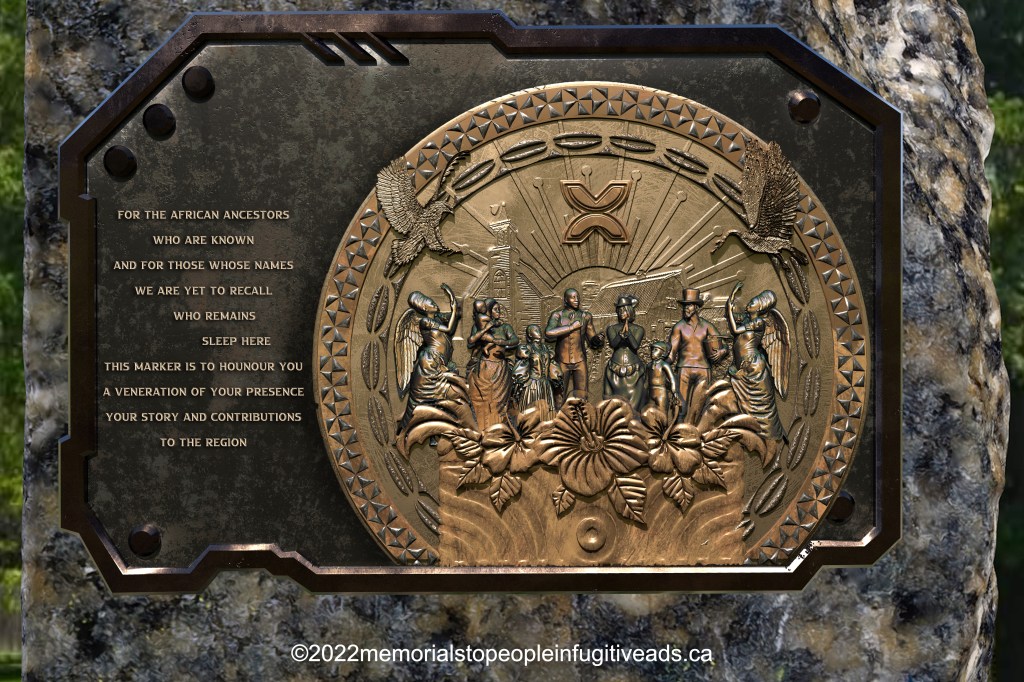
The proposed concept for a relief sculpture is intended as a visual and symbolic offering, a memorial to a community of people who have been largely lost or forgotten. We share the art process below.
Memorials to People in Fugitive Ads by Quentin Ver-Cetty is licensed under a Creative Commons Attribution-NonCommercial-NoDerivatives 4.0 International License. Based on a work at https://memorialstopeopleinfugitiveads.ca/. Permissions beyond the scope of this license may be available at https://memorialstopeopleinfugitiveads.ca/contact-2/.
Art Process
The proposed work–similar to other pieces such as Michaëlle Jean’s bust and Joshua Glover Monument, utilizes the technology of 3d printed and digital sculpting.
Using the program Z-brush, Rhino and Blender the digital artwork achieves high accuracy and fine details. The process also allows for room for revision or amendments along with the creation of staging in-situ references. In contrast to analogue and traditional sculpting. digital, augmented reality, or 3d printed maquettes makes it possible to assess viability in a fast and cost-efficient way.
The process of transferring from digital to physical would utilize the translation process of a fabricator such as Artcast, Inc, the company that worked on Joshua Glover. The proposed digital sculpture would be 3d printed in wax. The artist would review it. Once approved the relief sculpture would be coated with a substance and gated to be cast in metal or resin. Once casting is complete, engineering for screws, rods, or anchors is attached and final adjustments are made for installation. The base is prepared simultaneously and incongruently with fabrication production. The sculpture holding is matched with the base and an assessment is made to ensure the installation process is possible and without issues.
Narratives of Freedom Fighters in Ontario, Canada
This project titled Memorializing the People of the Fugitive Slave Ads originated with work done in Barbados on the recovery of people memorialized in the fugitive slave ads. The project then evolved in Niagara as a way of remembering and honouring the people of African descent who lived, worked, worshipped, educated their children, contributed—and died in the region in the late eighteenth and early nineteenth centuries.
The project’s first phase concentrated on identifying African-diasporic people who had lived—and died—in the Niagara region in the late eighteenth and early nineteenth centuries. Besides the fugitive slave ads we found in the papers, we also found an extraordinary set of first-person testimonials from 1856, which we share here. The narratives shared are adapted from the eCampusOntario Public Domain Core Collection, produced using the 1856 John P. Jewett and Company edition of The Refugee: or the Narratives of Fugitive Slaves in Canada courtesy of Documenting the American South.
By focusing on the Niagara region, we could concentrate more precisely on fugitive slave ads, which provide compelling portraits of individuals. Though written by enslavers offering rewards for the return of what they categorized as “property”, to the 21st-century eyes, the people in the ads stand as heroic resistance fighters, people—including young children—who consistently rose against impossibly brutal, often sadistic conditions. Because the ads contain details of what enslaved people looked like, sounded like, what they wore, details of their friends and families, as well as glimpses of their escape tactics, they feel alive. Our overarching goal is to promote Black resistance as something that speaks—with eloquent pain and integrity—to the drive towards equity and social justice.
Public Domain Text: Credit Statement
Adaptations of public domain texts do not require attribution. However, we acknowledge the work of the Public Domain Core Collection team through the collaboration between Brock University and The Toronto Metropolitan University (formerly Ryerson University).
This work has been adapted from The Refugee: or the Narratives of Fugitive Slaves in Canada, a title from the eCampusOntario Public Domain Core Collection. This work is in the Public Domain.
Content from the front and back matter is licensed under CC BY 4.0, and should be attributed according to Creative Commons best practices.
As of 2021, in Canada, texts are available in the public domain fifty years after the author’s death. The Refugee: or the Narratives of Fugitive Slaves in Canada, written by Benjamin Drew is available through the Public Domain Core Collection. The narratives are first-hand accounts shared by the freedom fighters about their brutal conditions and needs. Along with a material memorial, we share the lost stories, brought into public view to honour the people of African-diasporic communities, who resolutely resisted, day after day, year after year, century after century. We want to use this project to contribute to the process of decolonization.
The Public Domain Core Collection project is a collaboration between staff, faculty members, and students at Ryerson and Brock universities. Credit Statement
Adaptations of public domain texts do not require attribution; however, we acknowledge the work of eCampusOntario:
This work has been adapted from The Refugee: or the Narratives of Fugitive Slaves in Canada, a title from the eCampusOntario Public Domain Core Collection. This work is in the Public Domain.
Content from the front and back matter is licensed under CC BY 4.0 and should be attributed according to Creative Commons best practices.
Project Overview
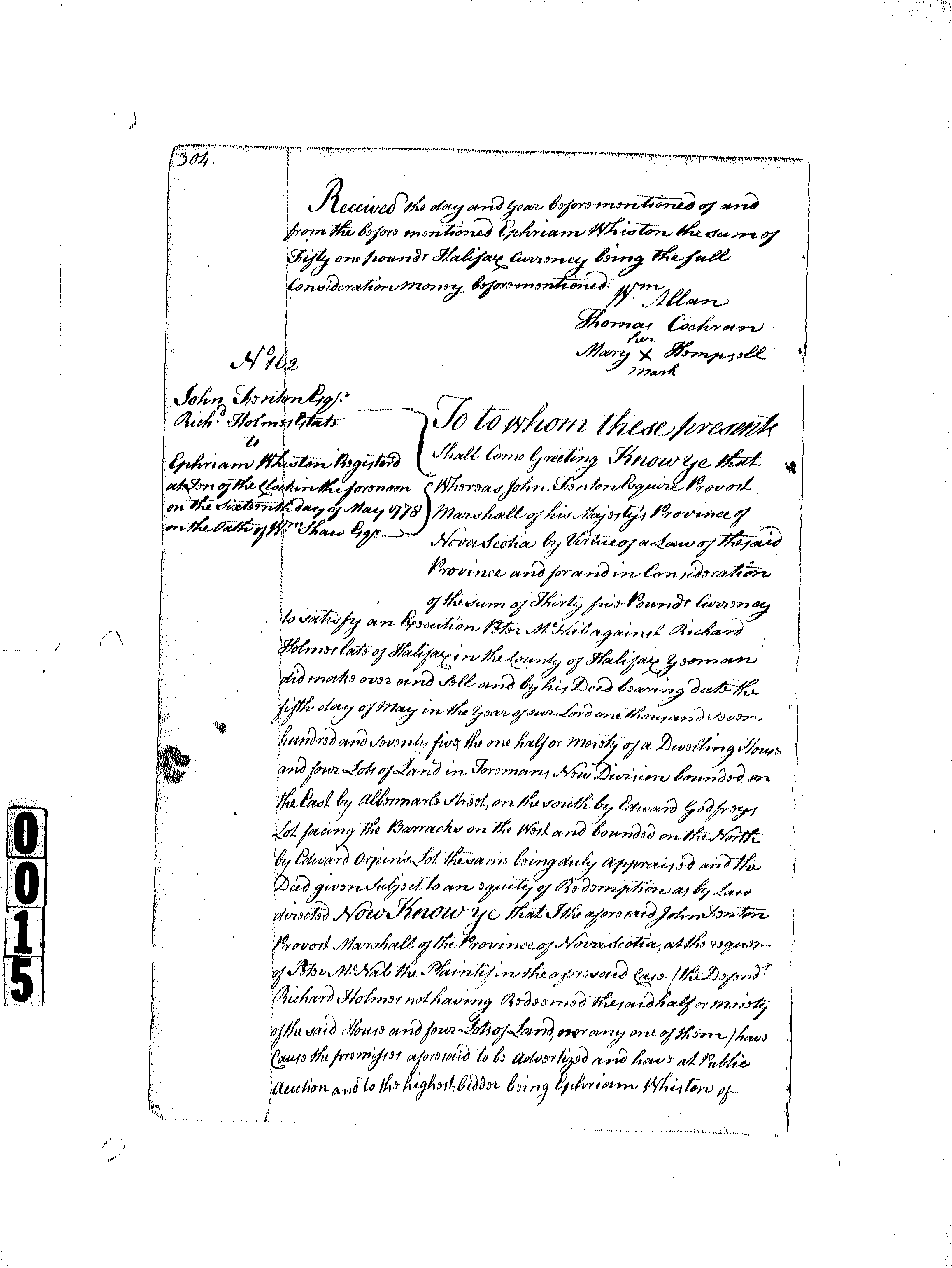
Source: Halifax deeds book 15, pg. 302, Nova Scotia Archives
The goal of the project is to create memorials to enslaved individuals from both Niagara and Barbados who appeared in late 18th and early 19th-century “fugitive slave” newspaper advertisements. Unlike generic histories of enslavement, fugitive slave ads provide compelling portraits of individuals. Because the ads contain details of what enslaved people looked like, sounded like, what they wore, details of their friends and families, as well as glimpses of their escape tactics, they feel alive.
Our overarching goal is to promote Black resistance as something that speaks–with eloquent pain and integrity–to the drive towards equity and social justice. As the imposing colonial statues—of, for instance, enslaver Edward Colston in Bristol and Edward Cornwallis (he offered bounties for killing Mi’kmaw) in Halifax—come down, we will be working towards material memorials (though not traditional statues) designed to reclaim the presence of people who resisted oppression.
Though written by enslavers offering rewards for the return of “property,” the people in the ads stand as heroic resistance fighters, people—including young children—who consistently rose against impossibly brutal, often sadistic conditions. In the Barbados Mercury Gazette, for instance, Lissa’s research led her to 13-year-old “Kitty . . . of slender make, and a pleasing countenance” who simply declared herself free. And “Tommy” about 4 feet 5-6 inches high with “rather thick and clumsy legs” who in the aftermath of the 1816 slave rebellion in Barbados cleverly engineered his escape by pretending that he had been “impressed for the service,” ostensibly to suppress the rebellion.
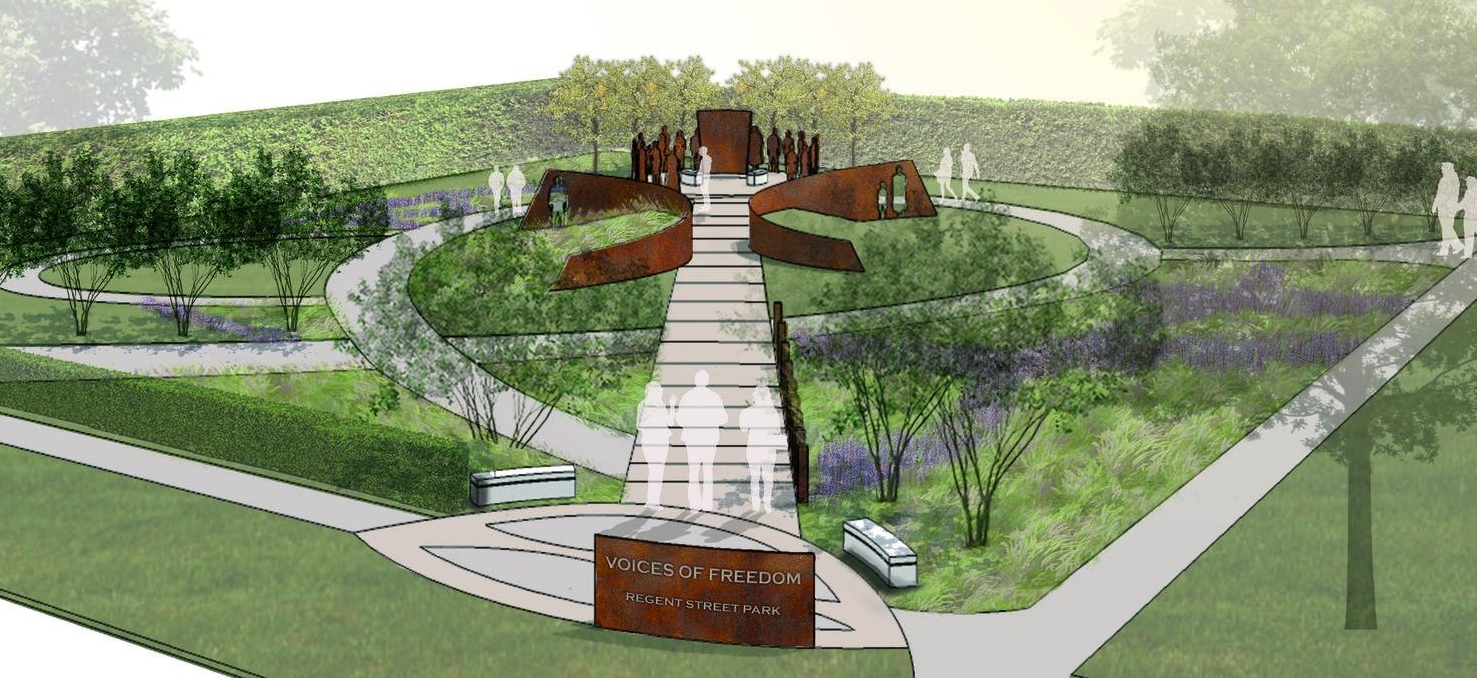
In Niagara, two stories of enslaved people–whose stories contributed to support for abolition legislation–are Chloe Cooley (1793) and Solomen Moseby ((1834). Both are recognized in the Voices of Freedom Park, opened in Niagara-on-the-Lake in 2018, to commemorate the town’s Black History and the 225th anniversary of the act to limit slavery.
The project will result in physical memorials that feature the strength and heroism of people who resisted impossible brutality through centuries of enforced enslavement. We would contribute, ideally, to the displacement of the trope of the “threatening” Black body and replace it with the construction of someone who is heroic, a resistance fighter who stands for freedom and social justice in the face of sustained White oppression.
Related Projects & Partnerships
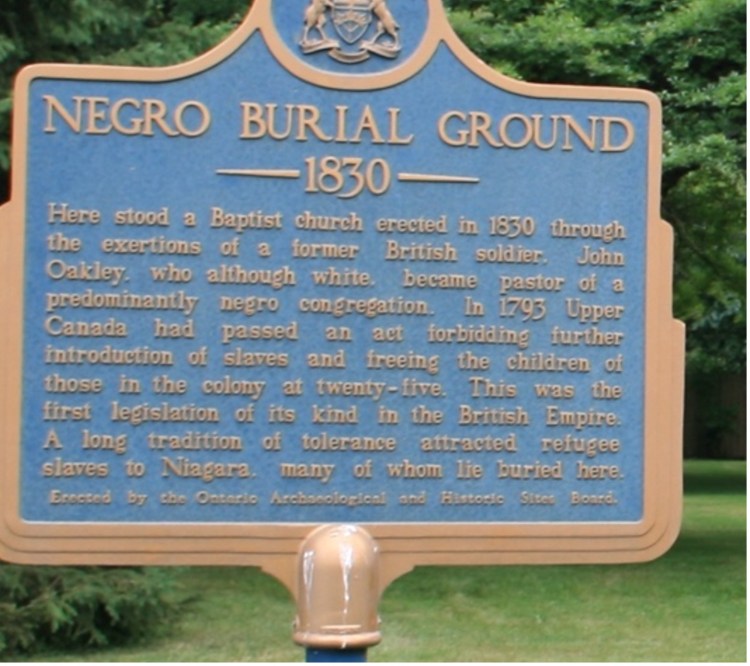
The Negro Burial Ground
Voices of Freedom in Niagara
Niagara Park
Honouring Black history along the Niagara River: https://www.niagaraparks.com/things-to-do/black-history-niagara-river
Additional Resources/Readings
Kamfoly-St. Angelo, Mabel., and Joseph Carl. St. Angelo. Negro Burial Ground : (#3353) Niagara Township, Niagara-on-the-Lake, Ontario . St. Catharines, Ont: Niagara Peninsula Branch, Ontario Genealogical Society, 1982. Print.
Creative Commons License


This work is licensed under a Creative Commons Attribution-NonCommercial-NoDerivatives 4.0 International License.
 Memorials to People in Fugitive Ads