
Like many of the enslaved people, much is unknown about Thursday. John Rock of Halifax placed a fugitive ad for an enslaved Black girl known as Thursday. The ad describes her as being four and a half feet tall, with a broad frame and a lump above her right eye. The ad also points to her attire in a red cloth petticoat and red baize bedgown. Nelson (2017) suggests that Rock’s ad crudely described “her self-care and beautification practices (the red ribbon worn about her head) with what was almost assuredly evidence of her physical abuse (the lump above her right eye…[which point to] the specific horrors of female enslavement” (para. 2). The dehumanizing slave ads also bring our attention to the beauty and individuality of enslaved people.
Thursday’s escape highlights her desperation but also her tenacious spirit of pushing back against her enslavement. The description of her appearance shows her resilience despite her bondage. Nelson (2017) invites us to re-imagine eighteenth-century freedom seekers as twenty-first-century freedom divas—to humanize their existence and spotlight their resilience. Doing so provokes discussions about the “stolen potential of our enslaved ancestors, and the resilience of Canada’s diverse African populations” (Nelson, 2017).
References
Nelson, C. (n.d.). Re-imagining the enslaved eighteenth-century freedom seekers as twenty-first-century sitters. AGO. https://ago.ca/wanted-essays
Artifacts
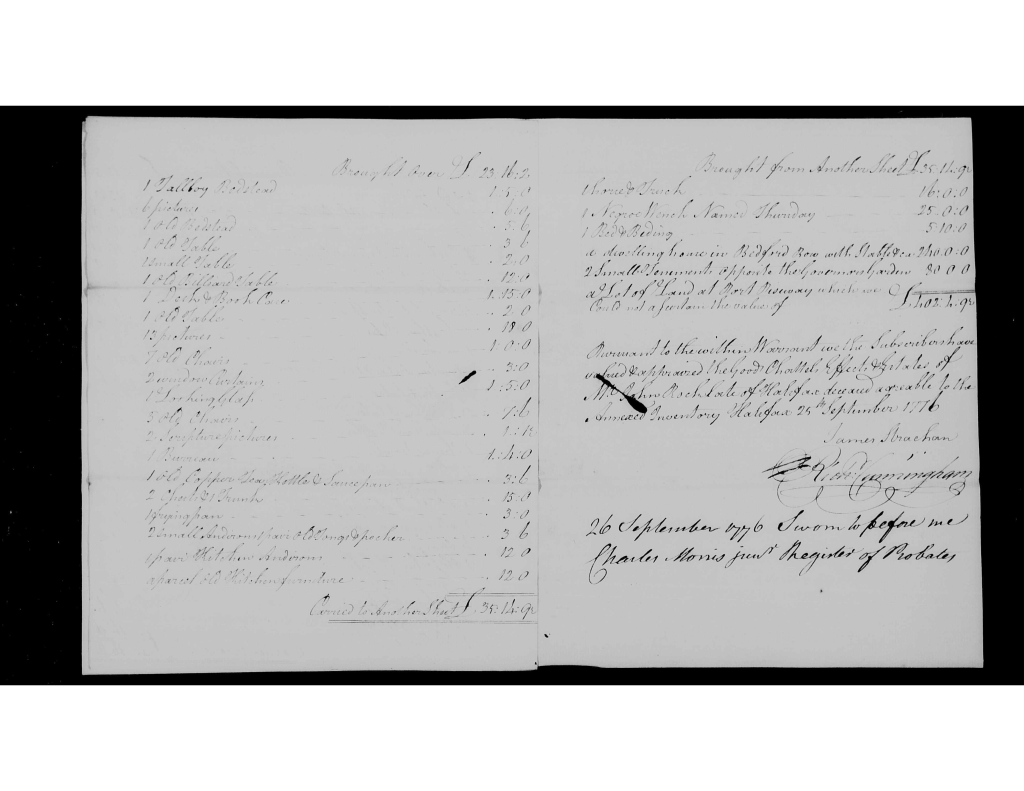
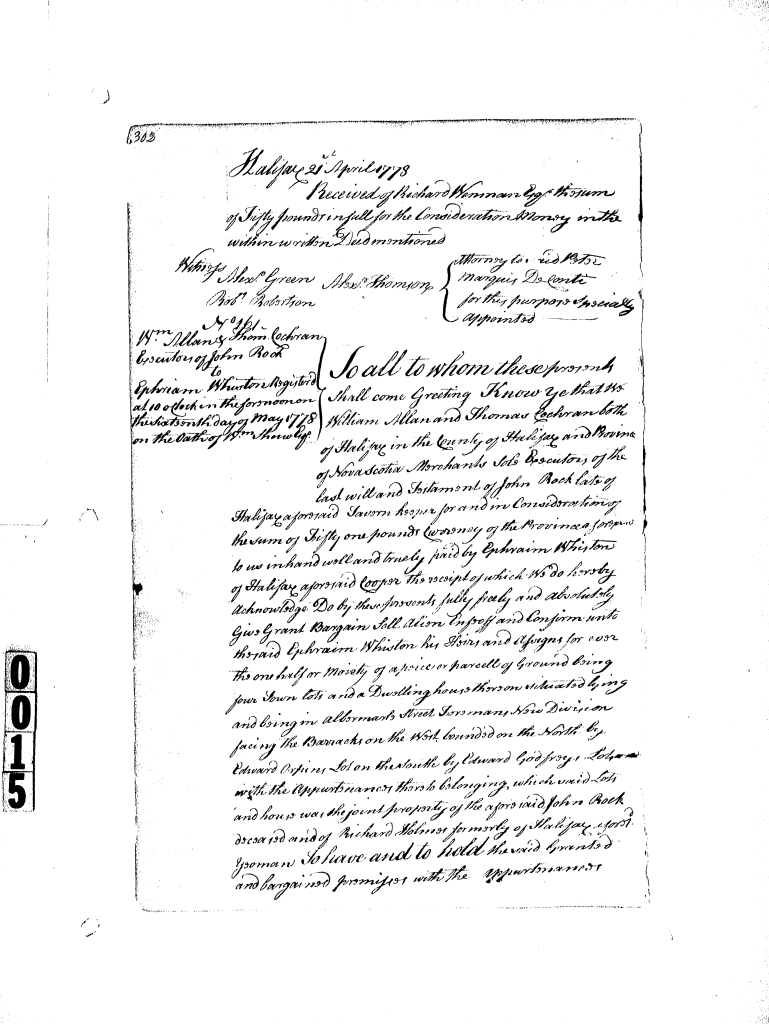
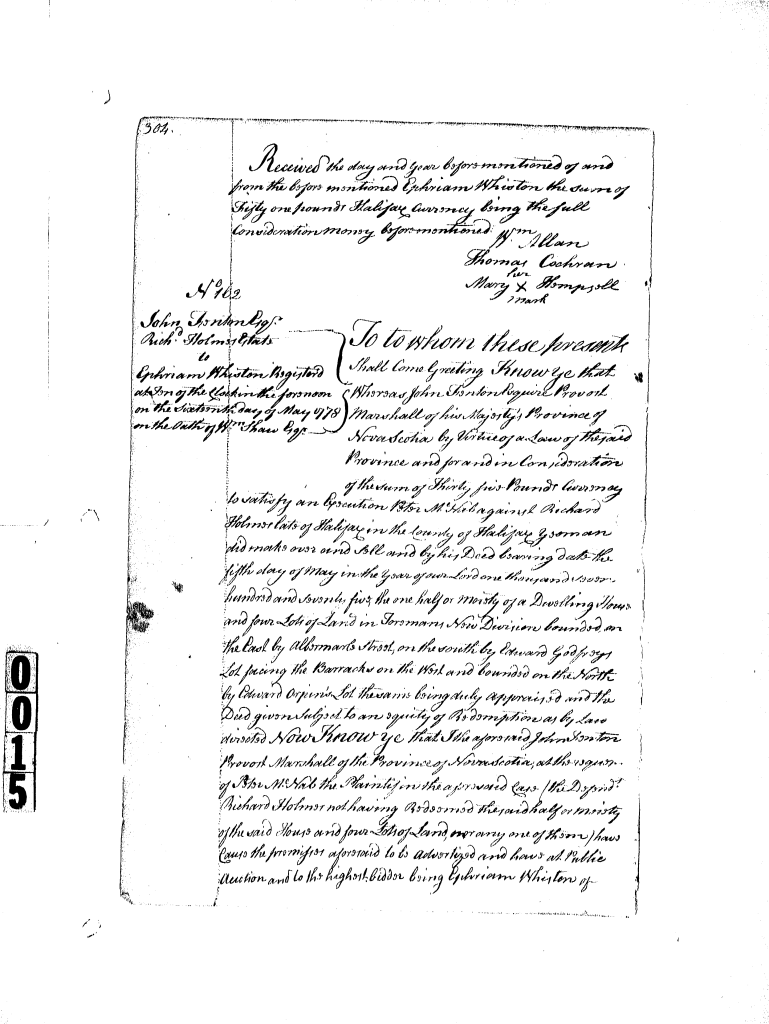
The artifacts below were retrieved from the Nova Scotia Archives. Figure 1 shows a fugitive notice for Thursday that John Rock placed. Figure 2 shows John Rock’s estate paper. In the book The Slave in Canada, T Watson Smith mentions that Thursday was included in Rock’s inventory at the time of his death. When combined with information from the estate papers, the archival records suggest that Rock owned properties on peninsular Halifax, with a house at the corner of Bedford Row. Figures 3, 4, 5 & 6 show Rock’s property deeds.

Source: Nova Scotia Archives
Figure 1: Fugitive notice for Thursday, placed by John Rock of Halifax, in the Nova Scotia Gazette and Weekly Chronicle, September 1, 1772.
Source: Nova Scotia Archives
Figure 2: John Rock estate papers R-61 Halifax image 132 on film 13
Source: Nova Scotia Archives
Figure 3: Halifax Deeds Book 15 page 302[71]_Page 1

Source: Nova Scotia Archives
Figure 4: Halifax Deeds Book 15 page 302[71]_Page_2
Source: Nova Scotia Archives
Figure 5: Halifax Deeds Book 15 page 302[71]_Page_3

Source: Nova Scotia Archives
Figure 6: Halifax Deeds Book 16 page 96[76]_Page_3
 Memorials to People in Fugitive Ads